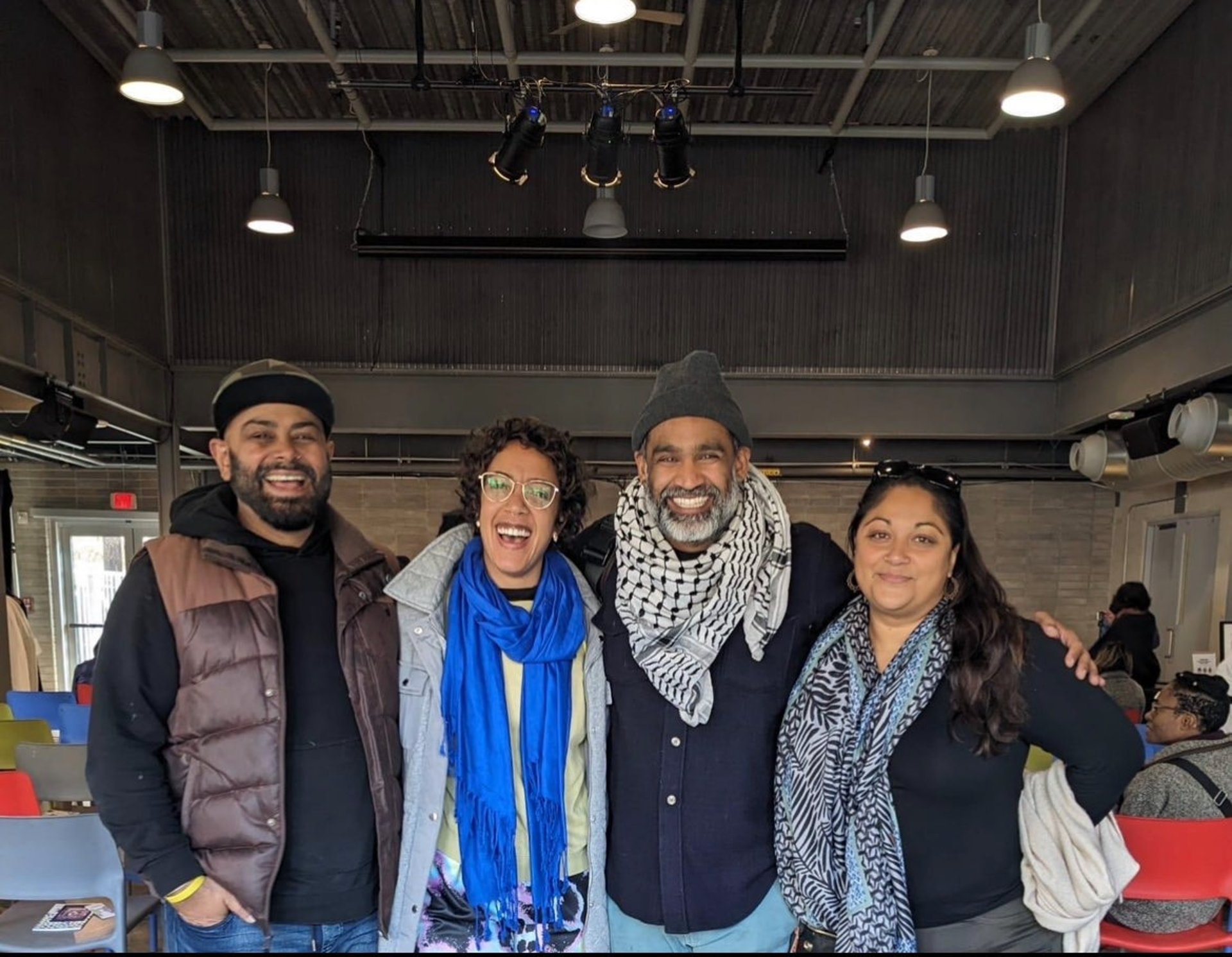
Reverence and Gratitude
The people and teachings that have deeply shaped my praxis
I am primarily concerned with Collective Joy, Collective Liberation and Community Care.
My life is a constant praxis - an ongoing process of critical reflection on texts and the practical application of theory towards a more Loving, Joyful and Beautiful world that my heart knows is possible. These teachers and their teachings have influenced me to my core and I am deeply grateful for the wisdom they have shared with this world. These are some of the sacred texts, on which my praxis is based.
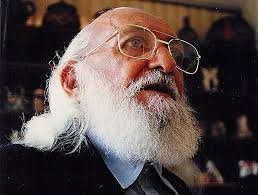

Paolo Friere
In 1967 Friere wrote Pedagogy of The Oppressed, a banned book in many jurisdictions today, which launched revolutionary ideas about education and social change through provoking the ideas that we can ‘read’ the society around us critically, and that “Education must be an act of love, and thus, an act of courage.”
“For Freire, the educational process is never neutral. Freire believed that education should empower people, not simply fill their heads with facts. He contrasted 'banking education' (like a classroom where students just memorize information) with 'problem-posing education' (where students actively explore, solve real-world problems and become active participants).
I grew up in Canada, in a colonial school system, which shaped my formative views on whose knowledge systems were valid and whose weren’t. For decades I sat in rows in a classroom where a teacher imparted knowledge I was meant to tacitly accept rather than grapple with and make meaning of for myself. In my early 30s I learned about radically different models of education, particularly Frierie’s Dialogical Process, which continues to be a pillar of my work. In the winter of 2021, alongside the talented facilitator Hannah Renglich, I co-wrote and piloted an anti-masterclass in social innovation and have continued to lead circles for grief as a portal to ripen and spiritually mature us.
U.S.-based organizer, educator, archivist and curator whose work focuses on ending violence, dismantling the prison industrial complex, transformative justice and supporting youth leadership development. In her interview Everything Worthwhile is Done With Other People , she gives us beautiful language around Hope as a Practice, “To practice active hope, we do not need to believe that everything will work out in the end. We need only decide who we are choosing to be and how we are choosing to function.” That shift—away from attachment to outcomes and toward integrity of action is the guiding compass in my life.
In an age of governments failing to be accountable to the people, it is completely reasonable that many of us in movements experience rage, despair and overwhelm. It can be easy to feel as if our actions won’t matter but it is important to remember that we aren’t responsible for outcomes, just for being the people we are called to be - by Creator, Love, Justice, future generations to whom we are indebted- or whatever guiding moral compass we root our convictions in.
Co-authored with Kelly Hayes, Let This Radicalize You speaks to the importance of creating and holding anchors during unsettling times. She writes, "This is not simply a task of educating ourselves but the ongoing work of charting and experiencing reality together and sharing our joy and grief over the wonders and tragedies of our times. Our atomized and alienating society leaves little organic space for political communion or even shared compassion.
In order to overcome these impediments, organizers must work to construct anchors that provide a coherent understanding of the world in catastrophic times and help people maintain their values and commitments. If we do not take the work of anchoring seriously, we may find that our own ships scatter or even sink with every strong gust of wind.
Anchors can take numerous shapes: a story, a community space, a sense of fellowship, a memorial -- anything that helps ground people in a shared sense of history, compassion and purpose. Projects and actions that anchor us awaken compassion, enliven our connectedness, reinforce our values, and, when necessary, reorient our political focus. We will need many such efforts in the coming years, as people's values are increasingly imperiled by further normalization of mass suffering and death, and collective memory is continuously whitewashed by the powerful. Fundamentally, people who have been conditioned, out of fear, to view their own interests in isolation, rather than to find strength in collectivity, must learn to anchor themselves to one another for the sake of survival."
My work in this world, at this time, is to create anchors.
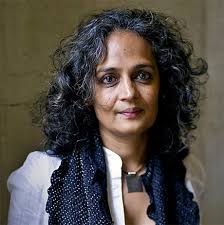
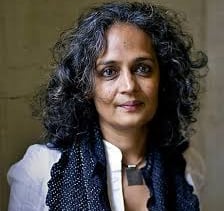
Arundhati Roy
The Covid-19 pandemic that began in the spring of 2020 was a portal to a new possible world. It drew our collective attention to the interconnectedness of so many disparate liberation movements and the polycrisis - our world’s current situation where multiple, distinct crises interact in a way that makes their combined effect worse than the sum of their individual parts.
I wish to hold on to the wisdom of that moment in our collective history… Shortly after the initial ‘shut-down’ in March 2020, Arundhati Roy published The Pandemic is The Portal in The Financial Times on April 2, 2020.
“Historically, pandemics have forced humans to break with the past and imagine their world anew. This one is no different. It is a portal, a gateway between one world and the next. We can choose to walk through it, dragging the carcasses of our prejudice and hatred, our avarice, our data banks and dead ideas, our dead rivers and smoky skies behind us. Or we can walk through lightly, with little luggage, ready to imagine another world. And ready to fight for it.”
These words hold a sort of prophetic importance to how I seek to spend my limited time on this earth - walking with and heralding others through the successive portals that will surely come with Love, Grace and deep care.
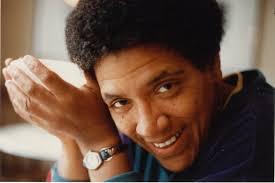
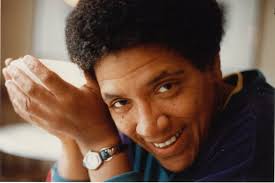
Audre Lorde
Through her deeply critical and prophetic writing, Lorde has given me frameworks for seeking social change that implicates me (and us all) in collective liberation in ways that are uncomfortable and subversive. Particularly through The Master’s Tools Will Never Dismantle The Master’s House and Poetry is Not a Luxury, in which she fought against the notion, ‘I think therefore I am,’ arguing that dreams and raw emotions allow us to consider meaningful action without the constraints of insight or traditional thought. By nourishing this sanctuary within, we create a space in which experience can grow into lasting change.
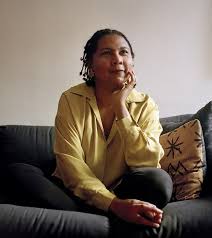
Bell hooks (Gloria Jean Watkins)
Through her profoundly beautiful and eloquent writing, hooks’ Love-ethic has greatly informed my ways of seeing and being in the world. Particularly, All About Love: New Visions, Teaching to Transgress: Education as The Practice of Freedom and The Will To Change: Men Masculinity and Love.
She has also put language to something I innately know–that systems of oppression are oppressive to everyone, rather than the more simplified binary of victim/victimizer, oppressed/oppressor. An example of this is her explanation that “the first act of violence that patriarchy demands of males is not violence toward women. Instead patriarchy demands of all males that they engage in acts of psychic self-mutilation, that they kill off the emotional parts of themselves. If an individual is not successful in emotionally crippling himself, he can count on patriarchal men to enact rituals of power that will assault his self-esteem.”
To claim our full humanness we must work at the personal and interpersonal level to transform the embodiments of what hooks called ‘dominator culture’ within us (patriarchy, white supremacy, ableism, and all the privileges that we enjoy by living in dominant identities).
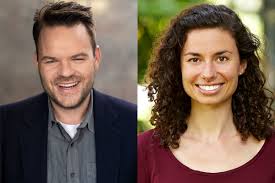
Casper Ter Kuile and Angie Thurston
In 2015 Casper and Angie published How We Gather at Harvard Divinity School that aimed to understand the spiritual crisis in millennials unaffiliated with traditional spiritual formations, profiling organizations and movements working to serve the gap in offerings. They focused on three primary questions; Who are we serving? How are we leading? What about God? This work informed much of my work with The United Church of Canada’s innovation team where I ran social-purpose business challenges in collaboration with universities, municipal governments and Indigenous friendship centres across what is now known as canada.
They have since launched Sacred Design Lab, a “studio creating projects that support spiritual innovation, cultivate the spiritual growth of leaders, and interpret the changing landscape of spiritual life.”
Like myself, they are interested in how people experience transcendence, and in creating useful containers for such experiences.
Adrienne Marie Brown (AMB)
Facilitator, mediator, pleasure activist, author and theologian - AMB’s work informs my life in many substantial ways - particularly through her curiosity ‘about what god is, how god is, and where we are relating to and running from and surrendering to god.”
Like her, my “answers are always shifting but that conversation has been continuous in my life.’ Her essay We Will Not Cancel Us gave me concise words and frames for how much we need each other and the imperative of holding accountable and even Loving those who transgress and cause harm, rather than discarding and writing them off. The anthology she compiled and edited, Pleasure Activism reminds informs my commitment to everyday Joy in movement work - to embody the joy and pleasure that is each and every one of our birthright as we work for a more just and liberated world.
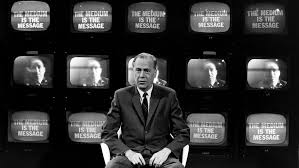
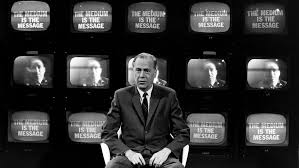
This ahead-of-his-time media theorist from my hometown of Toronto/Tkaronto wrote The Medium is The Massage in 1967, conveying that the format and technology used to communicate are more important than the content of the message itself, because the medium fundamentally changes how the message is perceived and how it affects society. The medium's characteristics influence the audience's experience, behavior, and understanding, sometimes in ways that are more significant than the message's actual words or images.
Today’s technologically-driven news cycle has forced us to move at a super-human pace of processing. We see live videos and images of atrocity on our phones and screens without the time and tools to calibrate.
I design experiences that tend to our age of poor digital hygiene and invite a deeper presence so that we can touch the pain of the world with better calibrated boundaries, and with a fierce Love.
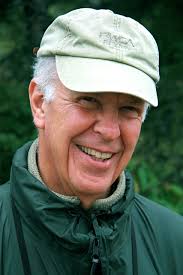
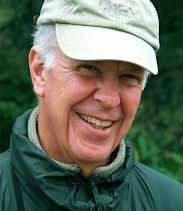
Parker is a writer, speaker and activist who focuses on issues in education, community, leadership, spirituality and social change.
There’s a common adage that we shouldn’t meet our heroes, but thanks to an elder in my life, Mardi Tindal, I had the absolute honour of spending one on one time with this beautiful human who has influenced so much of who I am. He is a true elder who shares his wisdom humbly in deep service of humanity.
Parker believes that “Our deepest calling is to grow into our own authentic self-hood, whether or not it conforms to some image of who we ought to be. As we do so, we will not only find the joy that every human being seeks–we will also find our path of authentic service in the world.”
Healing the Heart of Democracy: The Courage to Create a Politics Worthy Of The Human Spirit is a decade old and yet an urgent roadmap for this current moment. The Promise of Paradox: A Celebration of Contradictions in the Christian Life taught me the imperative of holding contradictions with grace, and A Hidden Wholeness: The Journey Toward an Undivided Life gave me a roadmap for living into my authentic selfhood.